Criteria + risk translation
Applicable standards, threat and vulnerability information, mission needs, assets, consequences, and acceptance criteria organized for design.

JS Global coordinates anti-terrorism and force protection requirements with planning, architecture, structure, engineering, site design, and operations to create proportionate, buildable protection.
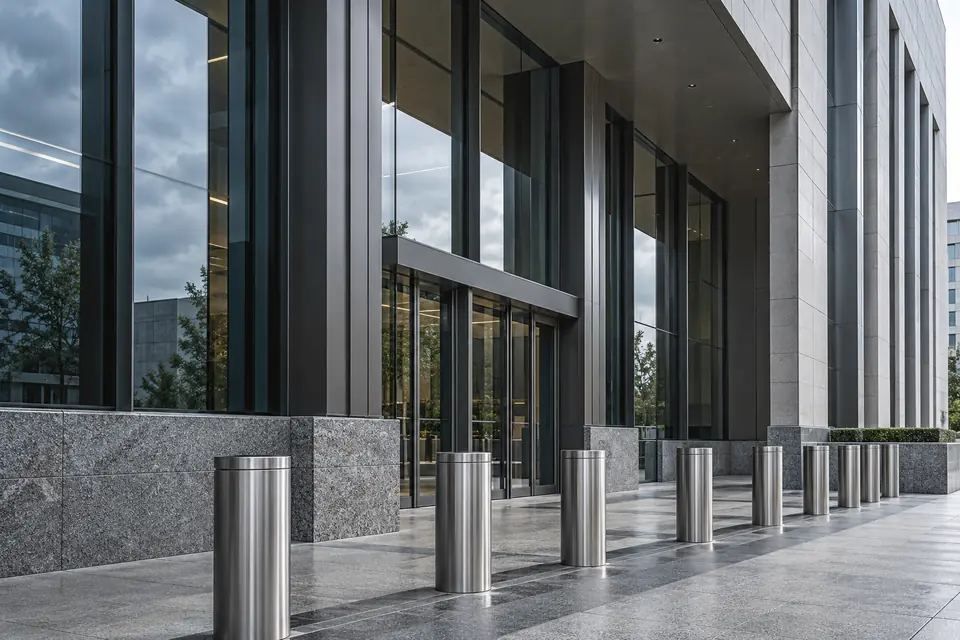
Protective requirements affect where a facility is placed, how people and vehicles approach it, how the perimeter functions, how loads move through the structure, and how envelope, openings, utilities, and operations respond to credible hazards.
JS Global integrates those requirements into the broader design rather than treating protection as an isolated overlay. The result balances risk reduction with mission, constructability, access, appearance, maintenance, cost, and the realities of the site.
Applicable standards, threat and vulnerability information, mission needs, assets, consequences, and acceptance criteria organized for design.
Controlled approaches, vehicle access, stand-off distances, barriers, circulation, screening, service areas, and emergency response.
Structural systems, envelope, glazing, doors, roofs, connections, openings, and critical components coordinated to required performance.
Public, controlled, restricted, and critical areas organized around access, screening, observation, response, and operational workflows.
Utilities, equipment, air intakes, emergency systems, pathways, redundancy, and critical services considered within the protective strategy.
Protective intent translated into coordinated details, specifications, reviews, testing requirements, field support, and acceptance evidence.
Protective requirements remain tied to mission, assets, credible hazards, and acceptance criteria.
Site, structure, envelope, openings, systems, and operations support one strategy.
Measures are coordinated for constructability, maintenance, access, and architectural integration.
Documentation, reviews, testing, and evidence support traceable delivery.
Confirm mission, assets, users, criteria, hazards, vulnerabilities, consequences, authorities, and acceptable risk.
Develop site, zoning, circulation, standoff, access, screening, response, and infrastructure strategies.
Coordinate structural, envelope, opening, utility, MEP, technology, operational, and architectural measures.
Translate intent into clear criteria, drawings, details, schedules, specifications, and testing requirements.
Support reviews, submittals, mockups, testing, field conditions, deficiencies, evidence, and closeout.
Practical answers about integration, existing facilities, scope, and construction support.
Share the facility, mission, site, applicable criteria, known hazards, project stage, and operating constraints. JS Global will help define a proportionate protective design response.
Discuss a Protective Design Project ↗
Secure Design. Resilient Construction. Mission-Ready Solutions.
Federal Registrations JS Global, LLC · UEI LBFFDM94BRM5 · CAGE 1ZB73 · NAICS 236220 Atlantic Design Group, LLC · UEI FM4LWXQN5KQ6 · CAGE 48S09 Top Secret facility clearance. Other Than Small Business. | Headquarters |
JS Global, LLC | Atlantic Design Group